

Mining & Geochemical Screening
Use handheld and benchtop XRF to support exploration, field screening, grade control, ore and mineral characterization, sample selection, and mine-site laboratories.
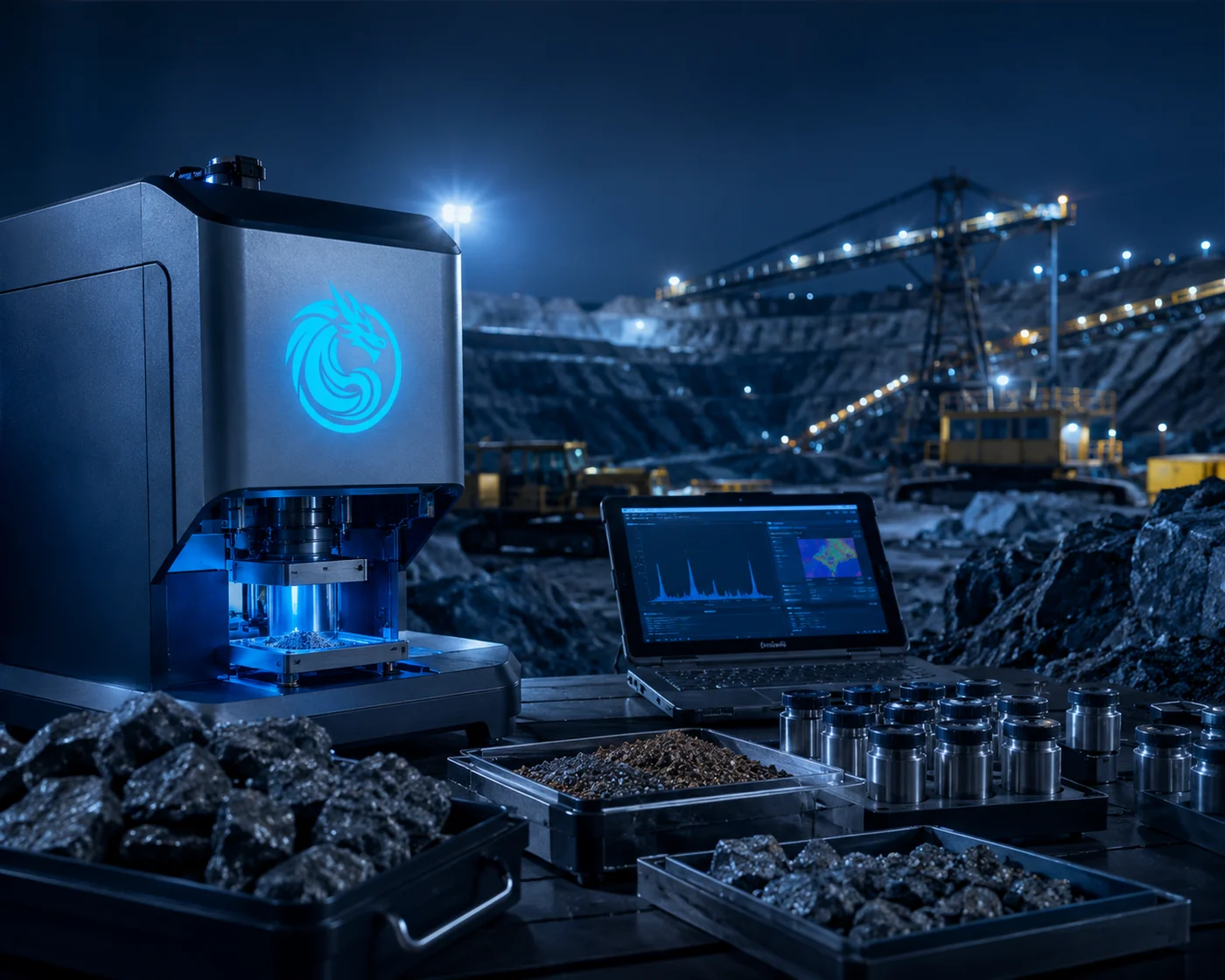
Rapid elemental information for exploration and mine workflows
Mining and geochemical screening applications use XRF to obtain rapid information about rocks, soils, ores, minerals, concentrates, and prepared samples. Results can support field decisions, sample selection, exploration targeting, grade-control workflows, process investigations, and laboratory prioritization.
Reliable use requires matrix-appropriate calibration, reference materials, consistent sample preparation, moisture control, particle-size management, suitable measurement time, and confirmation against the laboratory method used for final decisions.
What the application needs to establish
Measure target elements in geological and mining samples quickly enough to support field or operational decisions while maintaining a defined calibration and verification workflow.
Why the measurement matters
Exploration targeting
Screen samples and identify geochemical patterns that guide follow-up work.
Grade control
Provide timely information for ore classification, stockpiles, and operational decisions.
Sample prioritization
Select samples for detailed laboratory analysis and optimize analytical resources.
Process support
Evaluate ores, concentrates, tailings, and changing material characteristics.
Environmental screening
Assess soils, sediments, wastes, and contaminated materials for selected elements.
How the measurement is approached
Handheld XRF provides portable field measurement, while benchtop XRF supports controlled laboratory geometry and prepared samples. Both use characteristic X-ray fluorescence and require calibration suitable for the geological matrix.
Typical operating locations
- Exploration traverses and drill programs
- Core sheds and sample-preparation facilities
- Open-pit and underground mine operations
- Grade-control and stockpile workflows
- Concentrators and metallurgical plants
- Tailings, waste, soil, and environmental investigations
- Mine-site, contract, and research laboratories
Instrument-selection considerations
- Target elements and geological matrix
- Expected grade range and decision thresholds
- Moisture, particle size, heterogeneity, and sample thickness
- Field screening or prepared-sample laboratory workflow
- Calibration standards and reference materials
- Measurement time, replicate strategy, and quality controls
- Correlation to laboratory methods and final decision authority
Where this application is used.

Chemical Processing
Application-focused instrumentation for Chemical Processing, covering Trace moisture, H2S and sulfur, TOC, flow, and multipoint temperature across Reactors, columns, specialty gas systems, and utilities.
Explore →
Fertilizers & Chemicals
Analytical and engineered measurement systems for feedstocks, process gases, reactors, utilities, effluent, flow, and material quality.
Explore →
Coal & Coal Chemical
Application-focused instrumentation for Coal & Coal Chemical, covering Gas moisture, H2S and sulfur, gas flow, XRF coal/ash, and water quality across Gasification, coke oven gas, syngas, and coal chemicals.
Explore →
Semiconductor & Electronics
Application-focused instrumentation for Semiconductor & Electronics, covering Ultra-trace gas moisture, UPW TOC, and XRF screening across UPW, specialty gases, fabrication, and incoming materials.
Explore →
Metals, Mining & Materials
Elemental, temperature, and gas-flow instruments for exploration, grade control, alloy verification, production, recycling, and materials laboratories.
Explore →
Cement, Glass & Ceramics
Application-focused instrumentation for Cement, Glass & Ceramics, covering XRF composition, kiln temperature, flue-gas flow, and research QC across Raw mix, kiln, clinker, and glass batch.
Explore →
Industrial Manufacturing
Application-focused instrumentation for Industrial Manufacturing, covering Surface temperature, exhaust gas flow, XRF material verification, gas flow, and XRF alloy verification across Engine test cells, exhaust, rotating equipment, and materials QC.
Explore →
Environmental Monitoring & Compliance
Application-focused instrumentation for Environmental Monitoring & Compliance, covering Oil-in-water, turbidity, TOC, emissions flow, and XRF soil screening across Wastewater discharge, emissions, contaminated land, and compliance labs.
Explore →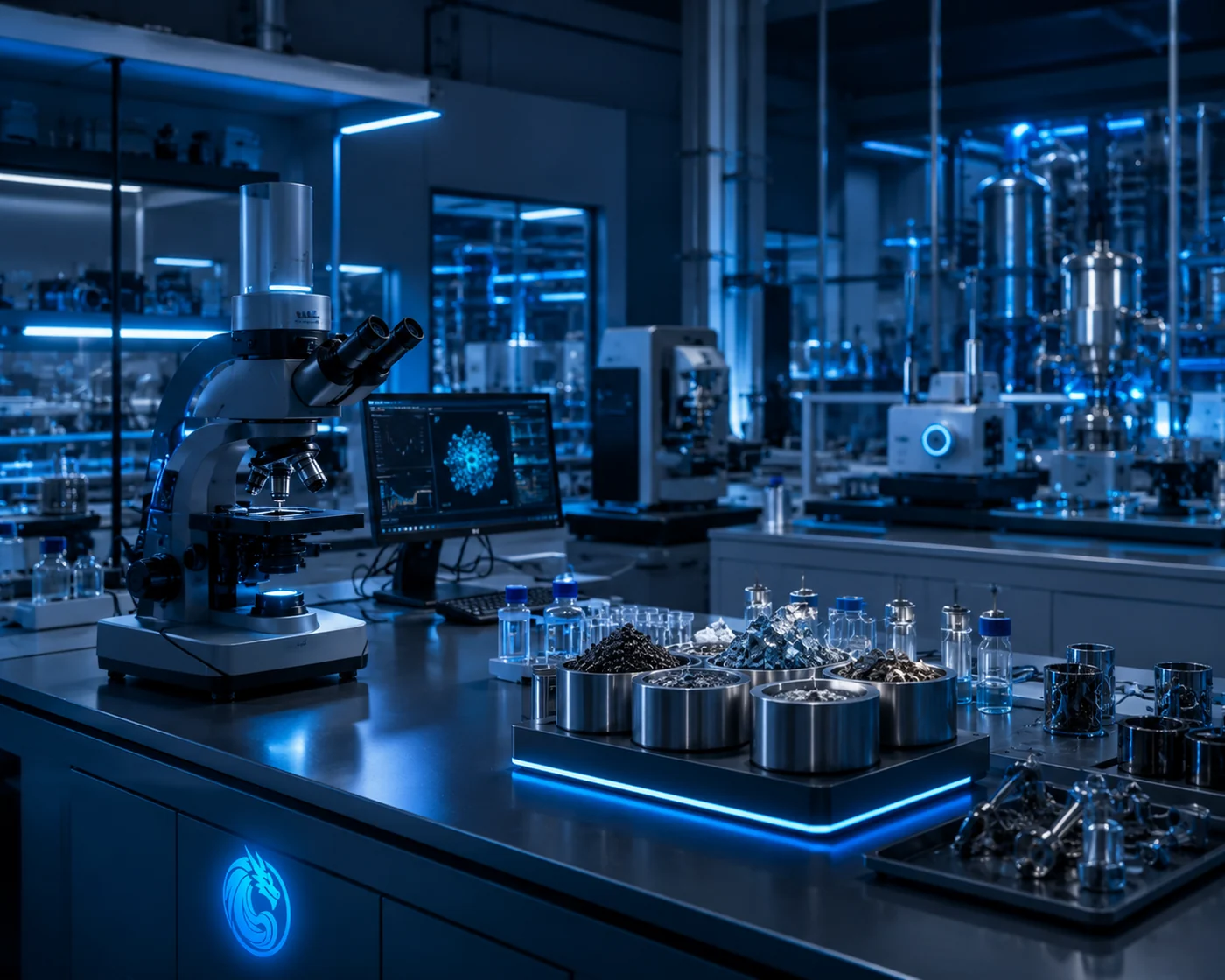
Research & Industrial Laboratories
Flexible analytical instruments for water, organic carbon, elemental composition, material verification, method development, and quality control.
Explore →Relevant measurement capabilities.
Explore the permanent Blue Dragon capability areas associated with this industry or application.
Elemental Analysis & Materials Characterization
X-ray fluorescence instruments for elemental composition, material identification, quality control, field screening, and industrial laboratories.
Explore series →Instruments connected to this application.
 Available
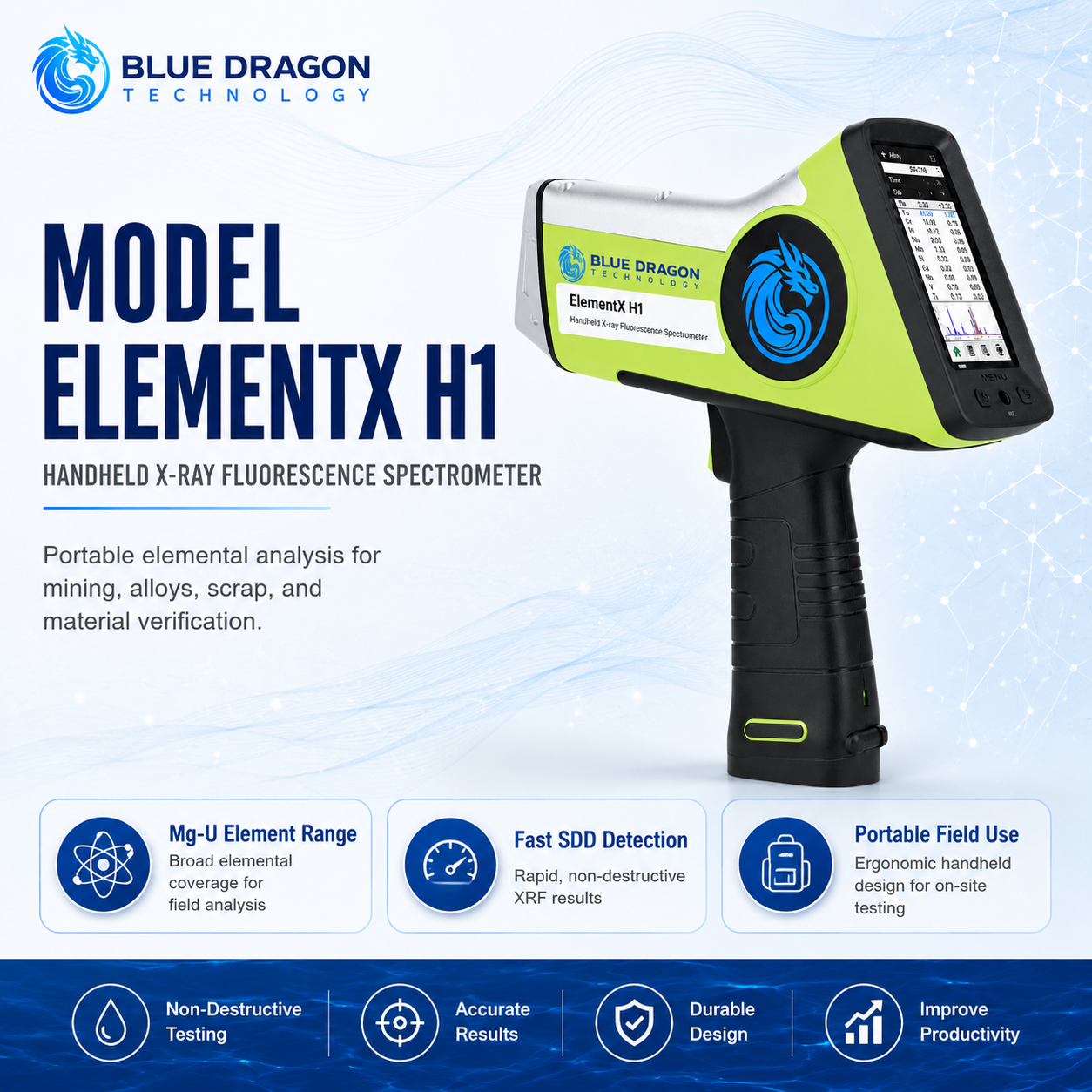
ElementX H1 Handheld XRF Spectrometer
Handheld EDXRF platform with Fast-SDD detection, Ag-target X-ray tube, touchscreen Linux interface, dual batteries, and application-specific analysis modes and calibrations.
View instrument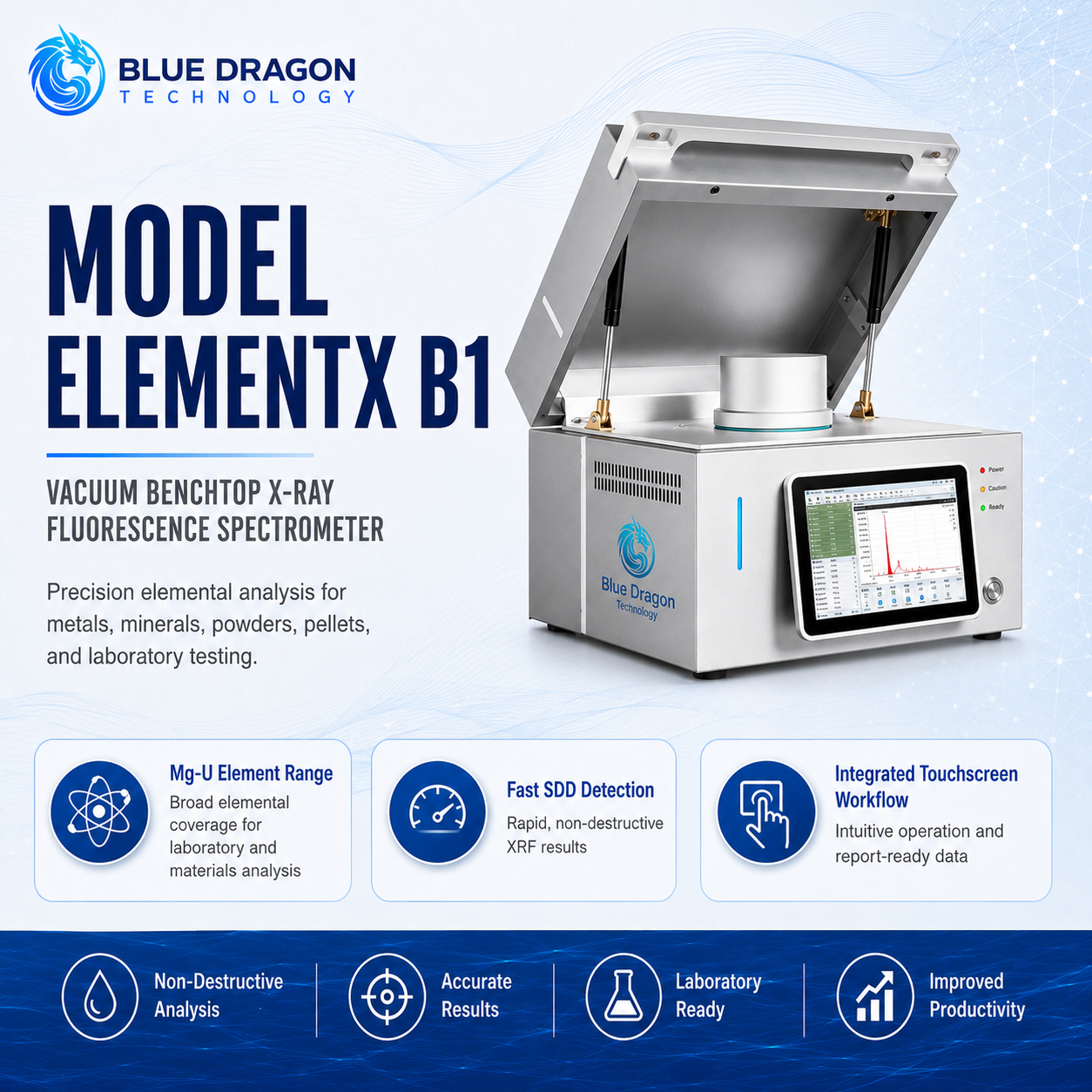 Available
ElementX B1 Vacuum Benchtop XRF Spectrometer
Vacuum benchtop EDXRF platform with a 50 kV tungsten-target tube, Fast-SDD detector, 6 mm collimator, sample camera, integrated touchscreen computer, and elemental-analysis software.
View instrumentRelated applications.

Elemental Composition Analysis
XRF measurement of elemental composition in metals, minerals, powders, solids, filters, soils, and prepared samples.
Explore →
Material Identification & Verification
XRF-based identification and verification of alloys, metals, components, incoming materials, maintenance replacements, and recycled material.
Explore →
Positive Material Identification (PMI)
Alloy/material PMI using suitable calibration and configuration.
Explore →
Ore Grade / Concentrate Analysis
Elemental analysis of ores, concentrates and mineral products.
Explore →
Lithium / Critical-Mineral Screening
Field screening for critical-mineral exploration subject to calibration.
Explore →
Cement / Glass / Ceramics Analysis
Elemental composition of cementitious, glass and ceramic raw materials/products.
Explore →
RoHS / Hazardous-Substance Screening
Screening for regulated elements with suitable application mode.
Explore →
Application questions.
Can handheld XRF replace laboratory assay?
Usually not for final commercial or resource decisions without a validated method. It is highly useful for screening, targeting, grade-control support, and sample prioritization.
How does moisture affect results?
Moisture changes the effective sample matrix and can dilute or attenuate the XRF response. Consistent drying, correction, or calibration may be required.
Why is sample preparation important?
Particle size, segregation, surface roughness, thickness, and heterogeneity affect repeatability and accuracy. Prepared cups or pellets may improve controlled analysis.
Can one calibration cover every ore type?
No. Different matrices and mineralogy may require separate calibrations, standards, corrections, or application modes.
Discuss your mining or geochemical screening application.
Provide the sample types, target elements, expected grades, matrix and mineralogy, moisture and preparation, field or laboratory workflow, throughput, and decision criteria.