

Multipoint Temperature Profiling
Measure temperature at multiple defined positions within reactors, columns, vessels, catalyst beds, and process equipment using an engineered assembly.
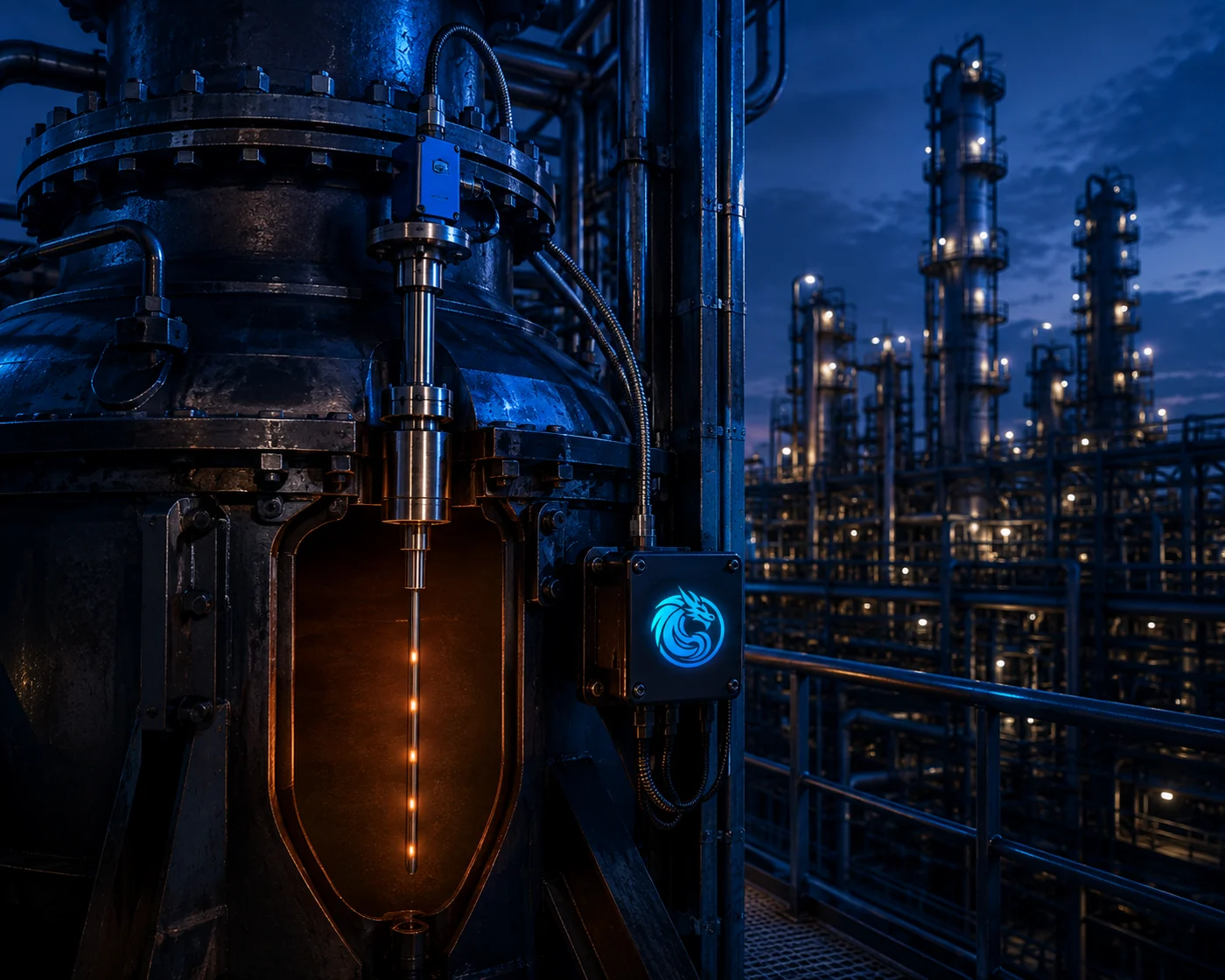
A spatial temperature profile rather than one measurement point
Multipoint temperature systems provide measurements at several elevations or positions through a single process connection or engineered arrangement. They are used where the temperature distribution across a reactor, column, vessel, bed, or process zone is more useful than one local reading.
The assembly must be designed around the process connection, insertion length, sensor positions, support, vibration, pressure, temperature, corrosion, replaceability, routing, and installation constraints.
What the application needs to establish
Establish the temperature distribution at defined positions within process equipment with suitable sensor spacing, response, mechanical support, and process containment.
Why the measurement matters
Process profile
Reveal gradients, fronts, hot spots, cold zones, and changing thermal behavior.
Reaction control
Support operating decisions in reactors, catalyst beds, and chemical processes.
Separation performance
Understand temperature distribution in columns and vessels.
Equipment protection
Identify abnormal thermal conditions before they affect equipment or product.
Troubleshooting
Compare temperature positions during startup, load changes, catalyst aging, or process disturbances.
How the measurement is approached
Multiple thermocouple or resistance-temperature elements are positioned along an engineered probe or assembly. The design may use individual sheaths, a common protective tube, flexible routing, supports, and project-specific process connections.
Typical operating locations
- Reactors and catalyst beds
- Distillation and fractionation columns
- Chemical process vessels
- Reformers and thermal-process equipment
- Storage or treatment vessels
- Pilot plants and research reactors
- Power, petrochemical, refinery, and fertilizer processes
Instrument-selection considerations
- Number and location of measuring points
- Insertion length, nozzle, flange, and process connection
- Pressure, temperature, corrosion, and process composition
- Sensor type, sheath, response, and accuracy
- Vibration, flow forces, support, and mechanical design
- Replacement, maintenance, routing, and termination
- Drawings, fabrication documentation, testing, and installation
Where this application is used.

Natural Gas & LNG
Measurement solutions for gas processing, sweetening, liquefaction, LNG quality, gas flow, utilities, and materials verification.
Explore →

Petrochemicals
Measurement systems for petrochemical feedstocks, reaction processes, fired equipment, utilities, effluent, gas flow, and material quality.
Explore →
Chemical Processing
Application-focused instrumentation for Chemical Processing, covering Trace moisture, H2S and sulfur, TOC, flow, and multipoint temperature across Reactors, columns, specialty gas systems, and utilities.
Explore →
Fertilizers & Chemicals
Analytical and engineered measurement systems for feedstocks, process gases, reactors, utilities, effluent, flow, and material quality.
Explore →
Hydrogen & Syngas
Application-focused instrumentation for Hydrogen & Syngas, covering Ultra-trace moisture, dew point, gas flow, H2S where relevant, and temperature across Electrolysis, reforming, purification, and compression.
Explore →
Coal & Coal Chemical
Application-focused instrumentation for Coal & Coal Chemical, covering Gas moisture, H2S and sulfur, gas flow, XRF coal/ash, and water quality across Gasification, coke oven gas, syngas, and coal chemicals.
Explore →
Power Generation
Measurement systems for fuels, boiler and high-purity water, fired equipment, gas flow, materials, and conventional or nuclear generation.
Explore →
Metals, Mining & Materials
Elemental, temperature, and gas-flow instruments for exploration, grade control, alloy verification, production, recycling, and materials laboratories.
Explore →
Cement, Glass & Ceramics
Application-focused instrumentation for Cement, Glass & Ceramics, covering XRF composition, kiln temperature, flue-gas flow, and research QC across Raw mix, kiln, clinker, and glass batch.
Explore →
Research & Industrial Laboratories
Flexible analytical instruments for water, organic carbon, elemental composition, material verification, method development, and quality control.
Explore →Relevant measurement capabilities.
Explore the permanent Blue Dragon capability areas associated with this industry or application.
Temperature Measurement Series
Engineered temperature-measurement assemblies manufactured by MESIT, Italy, and supplied and supported by Blue Dragon Technology.
Explore series →Instruments connected to this application.
 Available
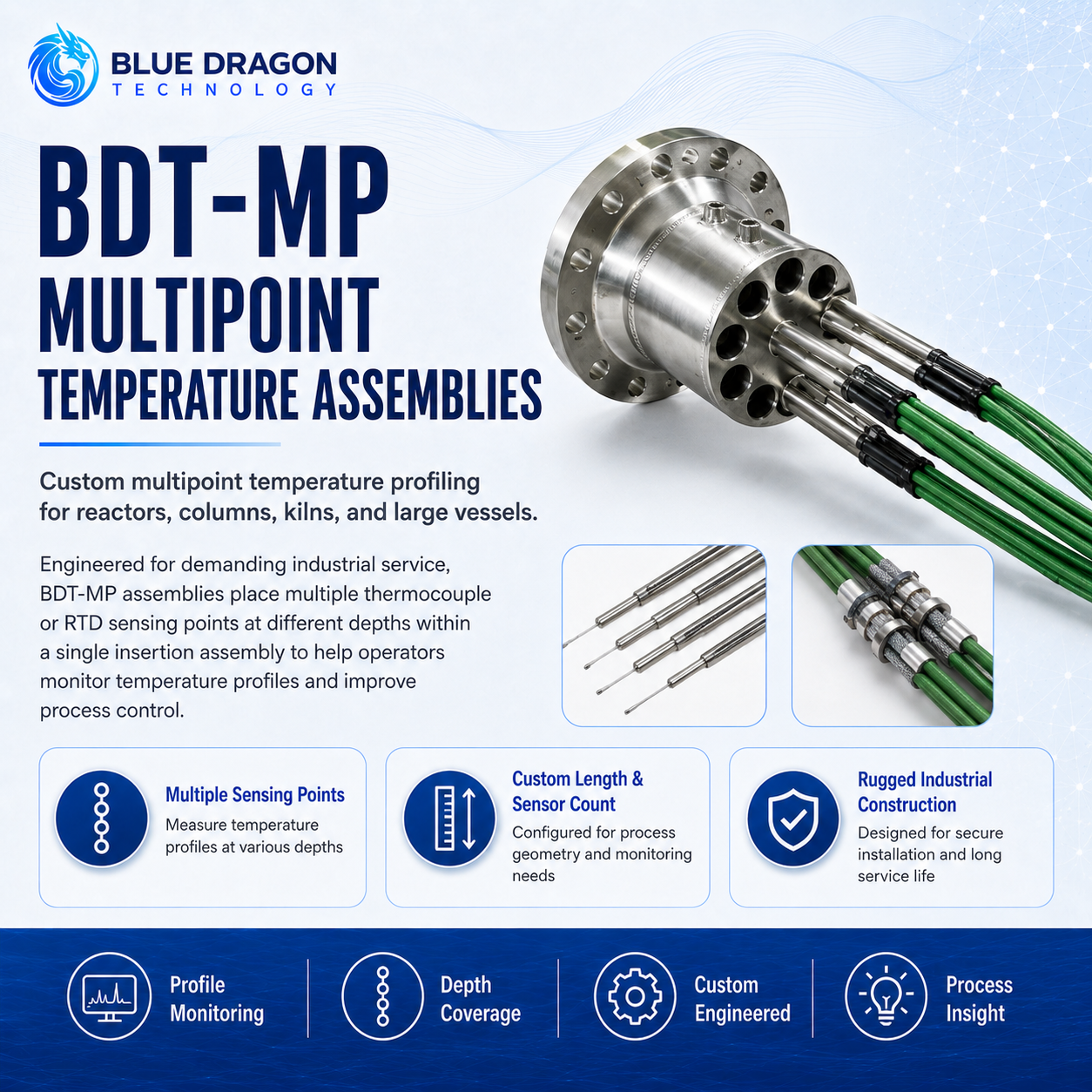
BDT-MP Multipoint Temperature Assemblies
Custom multipoint temperature assemblies with multiple thermocouple or RTD sensing points for measuring temperature profiles at defined elevations or depths within reactors, columns, vessels, tanks, and kilns.
View instrumentApplication questions.
How many measurement points can an assembly include?
The number depends on the design, sensor size, process connection, insertion length, routing, terminal arrangement, and project requirements.
Can individual sensors be replaced?
Replaceability depends on the assembly design. Some configurations use replaceable elements or guide tubes, while others are integral. This must be decided during engineering.
What mechanical information is required?
Provide vessel and nozzle drawings, insertion length, support points, flow direction, pressure, temperature, materials, vibration, sensor locations, and installation access.
Can thermocouples and RTDs be used?
The appropriate sensor technology depends on temperature range, response, accuracy, stability, dimensions, cable system, and process environment.
Discuss your multipoint temperature application.
Provide the equipment drawings, process connection, measuring-point locations, insertion length, pressure and temperature, materials, flow or vibration, support, termination, and maintenance requirements.